
2026-10-17 ·
Roof Repair vs. Replacement: Signs It May Be Time for a New Roof in Evansville, IN
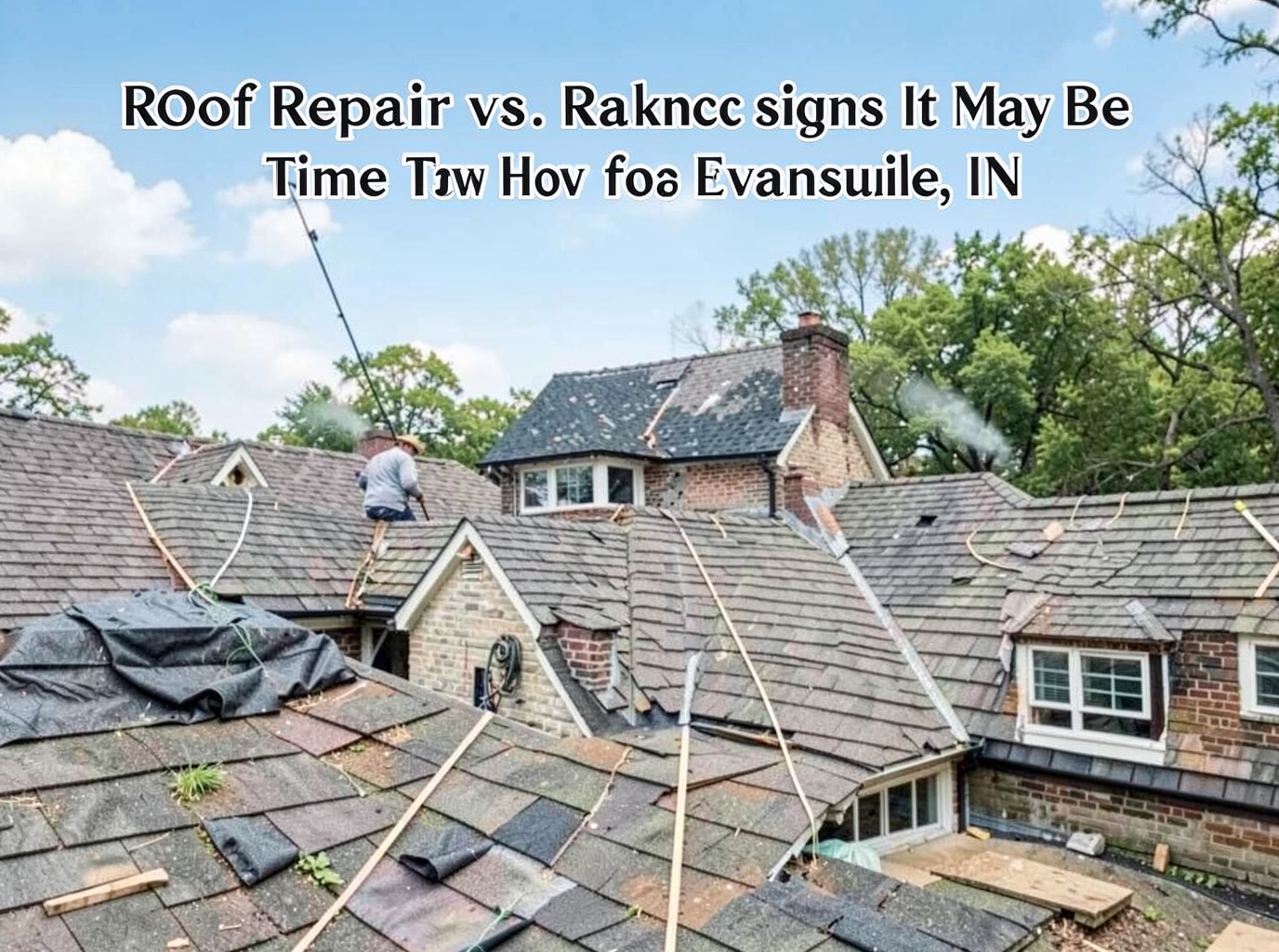
Most asphalt shingle roofs in Evansville need full replacement rather than ongoing repairs once they pass the 15–20 year mark or show widespread granule loss and curling edges. Local weather patterns with humid subtropical summers and frequent thunderstorms accelerate wear on older homes in neighborhoods like Downtown and the West Side.
Roof Age and Material Lifespan
Homes built before 1990 in Haynie's Corner and East Side sections of Vanderburgh County commonly carry original asphalt shingles that have already exceeded typical 20-year service life. Hot summer temperatures above 90 degrees soften shingles and speed UV degradation, while winter freeze-thaw cycles lift edges and allow water intrusion. When a roof approaches or passes this age range, patching individual leaks rarely restores long-term protection. Owners in nearby Newburgh or Henderson often face the same timeline because the regional climate does not vary enough to extend material life. Checking installation records or counting layers during an inspection reveals whether another repair cycle makes sense or whether a complete tear-off is required.
Common Damage Patterns from Local Storms
Thunderstorms and occasional hail in Evansville frequently dent shingles and crack flashing around chimneys on homes near the Ohio River Levee. Wind-driven rain pushes water under lifted tabs, especially on West Side properties exposed to open fields. When damage covers more than 20–30 percent of the surface or appears on multiple slopes, repair costs quickly approach replacement pricing. Granule shedding that leaves gutters full of black grit signals the protective coating has failed across large areas. In these cases, continuing with spot fixes on roof leak repair only delays the inevitable while risking interior damage to ceilings and insulation.
Interior and Exterior Warning Signs
Water stains on second-floor ceilings or attic insulation point to active leaks that have already bypassed surface repairs. Sagging roof decking visible from the street in older Downtown blocks often means plywood has absorbed repeated moisture and lost structural strength. Daylight visible through deck boards during an attic check confirms the underlayment has deteriorated. Homeowners in Princeton or Princeton-area properties report the same progression after several seasons of heavy rain. Once these symptoms appear together, replacement becomes the practical choice over repeated leak calls.
Cost Comparison and Decision Factors
A targeted repair on a 1,500-square-foot Evansville roof may run $400–$1,500, yet the same roof replaced with new shingles and underlayment typically falls in the $6,000–$11,000 range depending on pitch and access. When three or more repairs occur within two years, cumulative expense exceeds the lower end of replacement pricing. Full replacement also allows removal of multiple shingle layers, which is common on East Evansville homes, and installation of modern ice-and-water shield along eaves. This upgrade addresses the freeze-thaw cycles that cause ice dams each winter.
When Replacement Protects the Home Long Term
Choosing replacement over repair makes sense when the roof no longer sheds water uniformly or when decking shows rot. Properties near Mesker Park Zoo or the Ford Center experience the same summer heat load that bakes shingles, so updated ventilation and ridge vents installed during replacement reduce attic temperatures and extend new material life. Linking to post-storm inspection guidance helps owners document damage before the next season arrives. For homes in the West Side or Central Evansville, a new roof also improves energy efficiency during the long humid summers. After weighing age, storm history, and visible deterioration, replacement restores reliable protection without repeated service visits.